
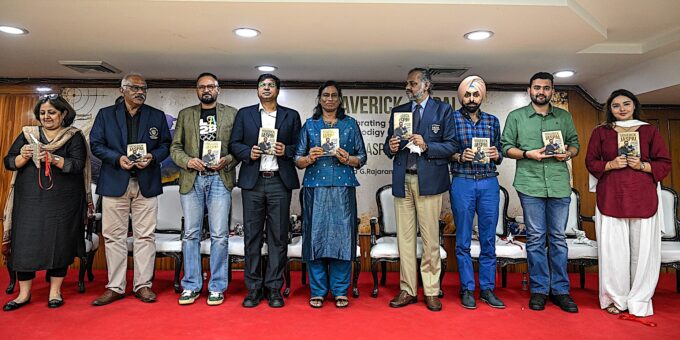
Following is the transcript of Indian Olympic Association President, Dr. PT Usha at the launch of Maverick Jaspal, a book by sports journalists S Kannan and G Rajaraman, published by Vitasta Blackspine
Good evening, ladies and gentlemen. Members of Jaspal’s family, his friends, his students, his colleagues, the authors of this wonderful book, and everyone who has gathered here this evening.
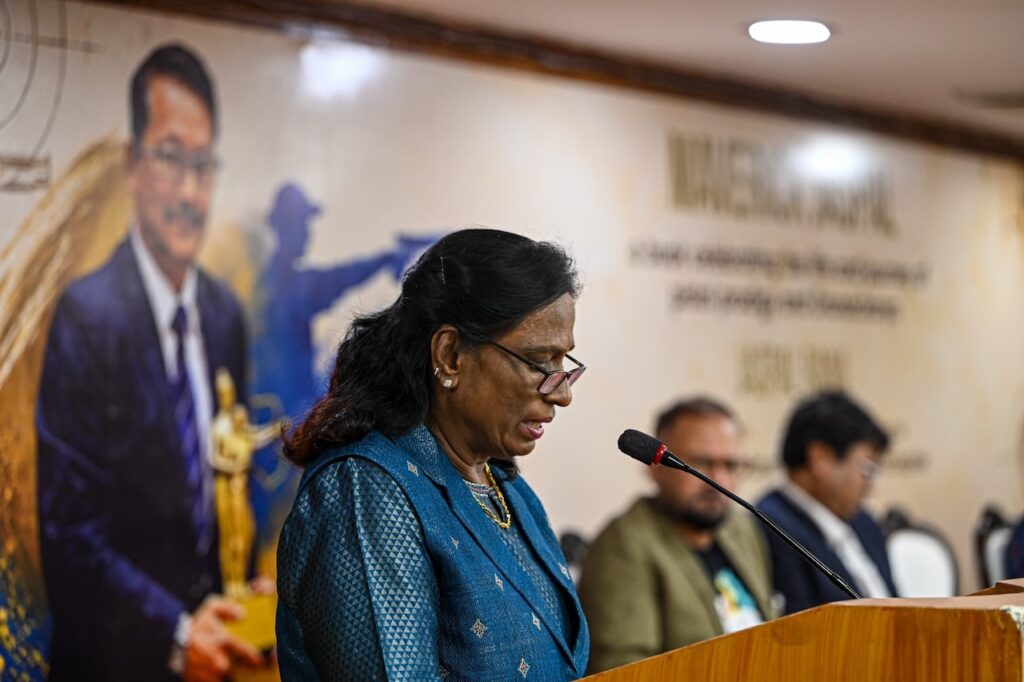
It is a privilege to be here for the launch of Maverick Jaspal. But I must confess that this is not an easy evening for me. A book launch is normally a celebration. We celebrate the achievements of a person, we share memories, we look at photographs, we tell stories, and, very often, the person whose story is being told is sitting among us, listening to all of us speak about him.
But today, Jaspal is not here. And that absence is something we will all feel very deeply this evening. We lost Jaspal far too soon. At just 49, he left us, leaving behind a family, friends, athletes and an entire sporting community that still finds it difficult to accept that he is no longer with us. Indian shooting lost one of its greatest champions and one of its most distinctive personalities.
His students lost a mentor. His friends lost a friend. And his family lost someone who can never be replaced. Jaspal may not be physically with us today — yet his presence is everywhere. It is in the photographs in this book. It is in the memories of his athletes. It is in the stories his friends tell. It is in the lessons he gave to young shooters. And it is in the achievements of those whom he helped to believe in themselves.
That is why Maverick Jaspal is such an important book.
It is not merely a record of medals and championships. It is not simply the story of a great shooter. It is the story of a life lived with extraordinary passion. It is the story of a man who was never afraid to be himself — outspoken, fiercely competitive, independent in his thinking, and sometimes, yes, a little difficult!
But underneath all of that was something that everyone who knew Jaspal understood.
He cared. Deeply.
He cared about his athletes. He cared about Indian shooting. He cared about winning for India. And he cared enough to tell young athletes the truth, even when that truth was not always what they wanted to hear.
Jaspal’s own career as an athlete was extraordinary. But I believe that, with time, we will increasingly recognise that his greatest contribution came when he moved from being the person standing on the podium to being the person standing behind the athlete.
As an athlete, the medal carries your name.
As a coach, the medal carries somebody else’s name — but a part of you is in that medal.
That is the beauty of coaching.
And Jaspal understood it.
We saw it in his work with so many young shooters. We saw it particularly in his relationship with Manu Bhaker. When Manu stood on the Olympic podium in Paris, millions of Indians saw an Olympic medal. But those who knew the journey saw the years of work, the pressure, the setbacks, the difficult moments, and the belief that kept her moving forward.
And when Jaspal embraced Manu after her Olympic success, there was something in that photograph that no statistics can ever capture.
There was pride. There was relief. And there was affection.
The photographs in this book capture that other side of Jaspal — the coach, the friend, the colleague, the mentor, the man who could be strict one moment and completely playful the next. They show how central he was to generations of Indian shooting teams and how much warmth there was behind the famous intensity.
That is what makes this book special.
And I would like to congratulate S. Kannan and G. Rajaraman for taking the time and effort to preserve this story. A person’s life is never remembered through achievements alone. It is remembered through the people who travelled with them, laughed with them, argued with them, learnt from them and loved them.
And that is what you have captured.
This year has also reminded us, painfully, of how much Indian sport can lose in a very short time.
Jaspal was not the only great sporting personality we lost. We also lost Raja Randhir Singh ji.
Raja Randhir Singh was a great Indian athlete, a five-time Olympian and a pioneer of Indian shooting, but his contribution to sport went far beyond his own career. He devoted decades to the Olympic movement and to strengthening sport in India, Asia and internationally.
Two remarkable men. Two different journeys. But one common commitment — India and Indian sport.
And as I thought about Jaspal and Raja ji, I asked myself: how do we ensure that their names do not simply remain in our memories?
Because memories, however precious, belong to one generation.
Legacy must belong to the next generation.
And therefore, I would like to end this evening not simply with a tribute, but with a commitment from the Indian Olympic Association.
On behalf of the IOA, I am pleased to announce that we will institute two Memorial Trophies to be presented at every Asian Games.
The Jaspal Rana Memorial Trophy will be presented to the Best Female Athlete of the Asian Games.
And the Raja Randhir Singh Memorial Trophy will be presented to the Best Male Athlete of the Asian Games.
I believe this is a fitting way to remember these two extraordinary men.
Jaspal devoted himself to developing champions. Raja devoted his life to serving the Olympic movement. Both understood what it meant to wear the Indian colours and represent our country on the biggest stages of sport.
And now, their names will travel with our athletes into the future.
Imagine a young Indian woman, years from now, standing at the Asian Games after producing the performance of her life, holding the Jaspal Rana Memorial Trophy.
And imagine a young Indian man doing the same, receiving the Raja Randhir Singh Memorial Trophy.
Perhaps they will not have known Jaspal. Perhaps they will never have met Raja ji.
But they will ask, “Who was Jaspal Rana? Who was Raja Randhir Singh ji? Why does this trophy carry their name?”
And someone will tell them.
That is how we keep people alive.
Not only in photographs.
Not only in books.
But in the dreams and achievements of those who come after them.
To Jaspal’s family, I hope this evening brings a little comfort. No tribute can replace him. No book can fill that space. But I hope you know that Jaspal’s life touched far more people than he could ever have realised.
He belonged to his family, of course.
But he also belonged to Indian shooting.
He belonged to Indian sport.
And today, he belongs to all of us who remember him.
Jaspal, we remember the champion. We remember the coach. We remember the maverick.
But most of all, we remember the man.
And Raja, we remember your contribution, your leadership and your lifelong service to Indian sport.
Tonight, we remember both of you.
And from this evening onwards, we will carry your names forward.
May these trophies remind every future Indian athlete that excellence is not simply about winning a medal.
It is about leaving something behind that inspires somebody else to dream.
Jaspal’s journey ended too soon.
Raja ji’s journey has also come to an end.
But their legacy does not end here.
It begins again — with the next generation of Indian athletes.
Om Shanti.
Thank you.
Photos: Courtesy Prakash Singh
