
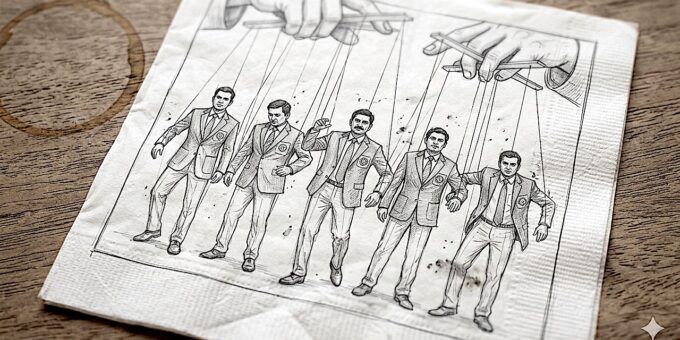
The High Court of Delhi on Monday allowed the results of the election to the All India Tennis Association (AITA) Executive Council to be made public 19 months after the completion of the process. But, in a bitter-sweet decision, the Court also brought this panel under an Administrator who will oversee AITA’s day-to-day affairs, rewrite the constitution and conduct the elections.
Delivering a Judgement in a writ petition filed by players Somdev Devvarman and Purav Raja against AITA, Justice Mini Pushkarna brought the extended run of Anil Jain and Anil Dhupar respectively as President and Secretary-General to an end. The Court accepted the Government’s suggestion that the elected body be allowed to assume charge as an interim measure.
However, citing factionalism with AITA, the Judge found it appropriate to appoint Justice (retd) Gita Mittal as the Administrator. “Such apparent division between the members of the Executive Committee, who are in disagreement with regards to the functioning of AITA, cannot be allowed to carry out the changes/amendment in the By-Laws and Constitution of AITA,” she wrote.
A reading of the judgement suggests that the outgoing President and Secretary-General were the dissenting factions, both wanting to stay in power. Though the factionalism would end with their exit, they gave the Court enough handle to impose an Administrator – and cause a further drain on the financial resources of AITA.
There is an important issue that bobs it head in the wake of this judgement. On the one hand, there is a clamour for sportspersons to be entrusted with the task of running sports organisations and on the other, former judges and bureaucrats are given the task of rewriting the constitutions of ‘autonomous’ national sports bodies and overseeing their governance.
Justice (retd) Gita Mittal, former Chief Justice of the High Court of Jammu & Kashmir and Ladakh, has been appointed as Administrator to carry out the amendments to the AITA Constitution, prepare the Electoral College and conduct the elections to the AITA Executive Council besides overseeing the day to day affairs.
The Administrator has been given three months to align the AITA constitution with the National Sports Governance Act 2025 and the National Sports Governance Rules 2026 and a further three months to conduct the elections. Justice Mini Pushkarna has fixed Rs. 10 lakh a month as the remuneration for the Administrator.
Yet, when Somdev Devvarman and Purav Raja moved the High Court of Delhi in 2024, little would they have envisaged that besides engaging lawyers to plead their case, tennis players would have to watch significant amounts of money being earmarked for legal fees and remuneration to Court-appointed administrator and other persons appointed by the Administrator.
If the process of conducting elections to the AITA Executive Council is completed in six months, AITA would have paid Rs. 60 lakh to the Administrator besides remuneration to any other person appointed by the Administrator, not to speak of incidental expenses for the team. For the record, AITA spent a little under Rs. 3 crore on tennis development in 2023-24 and has been earmarked Rs 81 lakh for international exposure of junior players in 2026-27.
Clearly, Government and judiciary seem to have little faith in autonomous bodies’ ability to author their respective constitutions. While it is a reflection of the inertia, if not reluctance, within National Sports Federations to comply with rules in force, it is also an outcome of the different yardsticks used by Ministry of Youth Affairs and Sports officials in dealing with the Federations.
Indian Olympic Association, Archery Association of India, Hockey India, All India Football Federation, Table Tennis Federation of India, Amateur Kabaddi Federation of India, Judo Federation of India, Taekwondo Federation of India, Basketball Federation of India and Equestrian Federation of India have all come under the spell of Court-appointed administrators.
It is not as if such appointments are a panacea to the Governance issues plaguing National Sports Federations. Many administrators/observers have been known to overstay in such positions of power. A Court-appointed Observer unilaterally raised his own remuneration when he discovered that an erstwhile judge was paid a larger amount to chair a meeting of a National Sports Federation.
Therefore, at some point soon, Government will have to consider amending the National Sports Governance Act 2025 to ensure that there is a uniformity in dispute resolution, in the manner in which roadmaps are laid out and in specifying timelines for the changes to be ushered in. With aspirations of being a leader in global sports, these issues must be ironed out now and not be allowed to escalate to such levels as seen now.
Most can be resolved with the appointment of the National Sports Governance Board and the circulation of a model constitution among the National Sports Federations. And, by a uniform interpretation of as well as consistent application of the rules in force. This will help ensure that the limited money at the disposal of a Federation is spent on training and competition of athletes.
Image: Created with Google Gemini for representation purposes only
