
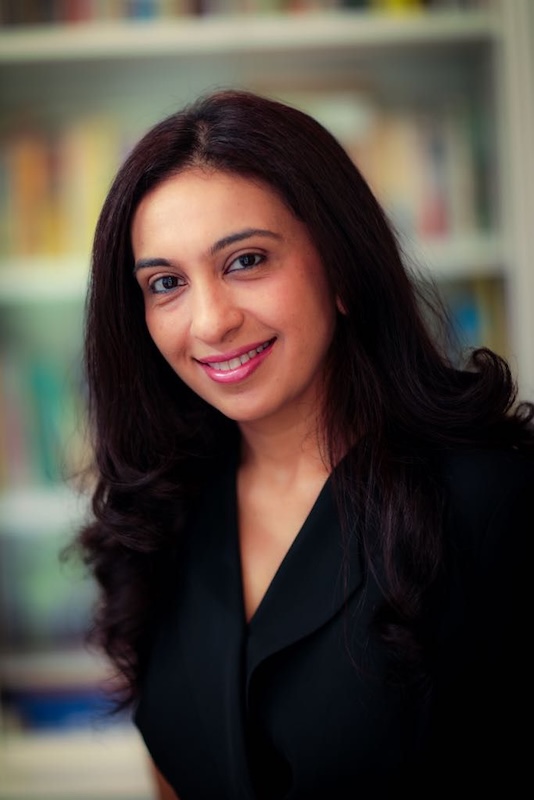
She has made the most of a ringside view of sports over the past couple of decades to observe paradigm shifts in brands marketing content and media marketing itself. She has seen how from looking for saliency and attention before all else, sports marketing focussed on engagement and then on creating economics around the athlete.
And now as she articulates the space Sports Marketing in India occupies at the moment, Darshana Bhalla, Founder of D’Artist Talent Ventures, paints a rosy picture for sport in the years ahead, excited mostly by the increasing ability and willingness of sportspersons to use Social Media platforms to talk directly with the fans, gratifying people who seek participation.
In freewheeling conversation with circleofsport.com, she readily shares insights into the state of sports marketing in India. Unhesitatingly, she also journeys into its future, visualising how athletes would develop skills beyond sport to make the most the digital distribution networks that are becoming available to them.
“It used to be third-party external engagement, but now people want to participate deeper in the narratives. They want to somewhere own a piece of it when it comes to a storytelling. A lot of other media verticals are not catching up in some senses with the youth of today as sport does,” she says.
Athletes learning to develop narratives beyond field of play
When the conversation veers to the perception that brands prefer only a handful of established performers from Indian sport, she helps look at it from a different lens than most people use. “What has always sold when it came to an athlete, apart from his elite performance, is a little bit of a narrative,” she says.
“It is for the athlete to decide that apart from their core craft, what are the other aspects which can attract consumers. Now, if you’re going to be cagey about that and if you’re not wanting to talk to consumers, Brand affinity will not follow,” she says citing the example of cricket legend Rahul Dravid.
“He became synonymous with ‘The Wall’, reflecting staying power and resilience. There was an alternative narrative. So, apart from being a great batsman, he became that go-to guy wherever you needed credibility and resilience, etc.,” she says. “If an athlete always remains only about the sport, potential commercialisation probability is impacted.”
She then added a nuance layer based in contemporary landscape. “Olympic-sport athletes have the potential to talk to 100 fans or 10,000 fans or a lakh fans through digital distribution. They must have the capability to communicate certain unique propositions about themselves. Then, they’ll be able to sell themselves to those ideas, narratives and brands,” she says.
Athletes as storytellers
“Somewhere for them to become individuals, there will need to be some unique proposition that they put on the table. Today’s athletes are learning through exposure to social media and digital distribution that they can actually create a community for themselves, and that community is actually where the meaning transfer happens.”
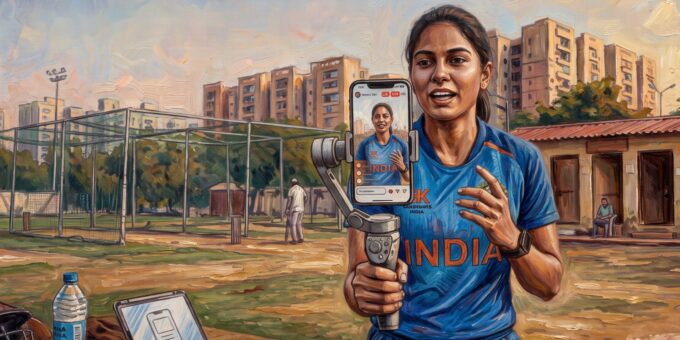
Indeed, athletes have learnt to emote, not just on the sports field, but in front of cameras. They’ve become camera-friendly, looking at the lens and talking. The younger athletes have learnt to do that, perhaps by watching others. Yet, because they’ve grown up with smart phones, such emoting comes naturally to them.
The contemporary athletes have got fingers on the pulse of the audience better now than their predecessors even ventured. It’s almost like they were born to do all of this. Besides their passion for sport, they have learnt to do things for the camera, doing things for sponsors. They are technology savvy and making the most of it.
Darshana Bhalla believes that today’s sportspersons have mostly let themselves go. “They’ve not restricted themselves. They’ve let themselves get exposed a part of their lives as humans,” she says, agreeing that their fearlessness does not stop in the sports arena but extending beyond with a readiness to show their vulnerabilities and strengths.
Talking about such fearlessness, Darshana Bhalla cites weightlifter Mirabai Chanu as a case in point. “After she won the silver medal in Tokyo Olympic Games, TV cameras showed her eating lunch in her austere home in Manipur. She didn’t have any fear in exposing it. I actually think that it was such a fantastic, realistic approach towards her social commentary,” she says.
And as luck would have it for these storytellers, Darshana Bhalla points out that there is a shift in the interest of consumers of such stories. “The number of sports documentaries on OTT platforms each week is a case in point. Youth used to look away at the mention of the word documentary, but today, because it knows a part of an athlete through social media, it wants to see full-length features of their stories or specific events,” she says.
Time for brands to embrace Intuitive Marketing
“Brands must start taking a little bit of risk in marketing because the standard formats are anyway on a bit of a depreciating value creation,” she says. They need to understand that sports participation is getting wider today, and that sometimes they need to go with what I call intuitive marketing,” she says.
Darshana Bhalla calls upon corporates to must invest a little bit in intuitive marketing before they are 100 per cent certain of data, and build from thereon. “That’s the only way you build markets; you cannot build markets with 100 per cent certainty,” she says, making a case for brand managers to become bolder and more creative.
“They need to shift the narrative from reel to real and showcase our women athletes more. I think brands need to make that little shift and back their hunch rather than be are a tad scared of consumer context,” Darshana Bhalla says.
Sport as the language of the Youth
Darshana Bhalla has an incredibly optimistic outlook to the evolution of sport in India. “Sport is going to be the youth language of the future. The Indian sports ecosystem today is beyond just sports. I think it has become the future of where the highest level of media assets will belong. I believe that we are at the cusp of a multisport era in our country,” she says.
“Cricket will obviously do its bit in terms of widening the horizons, the geography, the formats, the skills, etc. The growth potential for Olympic sport is immense because we are starting out. And the reality is that the digital distribution that we have in our country of content, of athletes, the fandom, the content playouts will start adding up to multisport,” she says.
“In the next five years, certain sporting ecosystems will get very highly valued. We may have a wider system of leagues with public sector and private sector investments coming together. There are a lot of advancements on infrastructure by the private sector. There is already humongous attention from the Government on this,” she says.
Having worked with celebrity athletes and entertainers, Darshana Bhalla knows there is scope to change the athlete ecosystem to Sport’s advantage. “I would like to, in a very orderly fashion, change the athlete ecosystem in terms of athlete promotion, athlete recognition and athlete community,” she says.
“I don’t mean only athletes who are making it to global podiums. I feel it’s time we start celebrating sports with our age-group players so that they’re encouraged and they’re endowed with help through brands. They can have a roadmap for the future. I would love to do that, and, to be honest, I’m working on that,” she says.
After all, athletes are gaining ground as fabulous storytellers.
Illustration: Created with Google Gemini for illustration purposes only
