
It is indisputable that Sport has the power to bind India, a diverse nation defined by vast geographical disparities, sociographies and varied cultural practices. We have seen how success of India’s teams and athletes on global platforms – be it the Cricket team or Chess stars, Hockey teams or Boxers – galvanises the country to celebrate in unison.
The National Sports Day is celebrated each year on August 29, the birth anniversary of the hockey legend, Maj. Dhyan Chand. Unlike other special days, which may be public holidays, the National Sports Day was designated in 2012 to promote sport as an exercise, fitness and health activity, recreation and entertainment and a career option.
Indeed, dedicated special days for sport have a great significance, none more the National Sports Day. Unpacking it in the slice of history, it brings the effervescent youth closer to the triumphs in the past, alongside providing a direction to them through curated public campaigns and sports events every year. It is also an apt time to reflect on India’s sporting history.
Early references to sport can be found in ancient Indian texts dating back to 2700 BCE. Writing a chapter titled An Overview of Sport in Modern India in The Routledge Handbook of Sport in Asia (2020), P Chelladurai and S Patil, have cited instances of Yoga either as a form of exercise, or a competitive event amidst a roaring provincial crowd.
Archery, Kabaddi and Kho Kho, were some endemic games that represented the traditional arena. Foreign invasions expanded the field of play. Later in the 1700s, the British empire introduced Cricket in India. Modern international games such as Hockey, Football, Tennis, Badminton too arrived on the Indian scene.
Indians embraced Hockey in particular as it did not involve expensive equipment or heavy investment. It became the choice of a nation that went on to win 8 Olympics gold medals, the 1975 World Cup and several other tournaments. Today, the Indian Olympic Association (IOA) lists thirty-three summer sports and four winter sports, with varying participation and scheduled events.
After attaining Independence in 1947, India made concerted efforts to create aspirational an sports order formally via curricular integration manifest in wide ranging initiatives of Ministry of Education before the formation of the Ministry of Human Resources Development and the Ministry of Youth and Sports Affairs.
After the New Economic Policy was adopted in 1991, sports as a business grew, built on the unique perceptual image of superior abilities, successful lifestyle and elevated social status. Over time, schemes such as Khelo India have been formulated to propagate sports, at every stage and in all walks of life.
Sports is no longer just an activity in India; it is the sunrise industry with a pivotal role in India’s growth story. In the beginning of 2025, policymakers encouraged India Inc. to invest and State Governments and Union Territories’ Administrations to adopt pro-Sports policy to produce champions envisioned in the idea of impactful India.
Sport thrives on popularity, fuelled by public spectacle and the collective response to performances and medals. The inherent binaries of sports ensure that winning matches and getting medals becomes the prime motive, as it transcends from being a peripheral part of society to a leading socio-economic mobiliser of identity, nationhood and glory.
The increasing intensity and interest are mirrored in the tribalization of Indian sports enthusiasts identifying themselves with successful teams, fervently exalting players who script victory. These players, accentuated by celebritisation, become the face of the game and everlasting fanship.
The National Sports Day draws attention to the Olympic sport in a nation captivated by Cricket. Though some still refer to Hockey as the National Game of India, possibly as ode to its enviable past, it is not is listed as such in any official documentation. Institutions recognise players and the glorious history of the sport generally by declaring a special day to commemorate them.
As Sue G. Mottinger wrote in 1998 in an article titled, Girls and Women in Sports: From One National Day to Gold Every Day, in the Journal of Physical Education, Recreation & Dance, the determination of sportswomen broke barriers in the 1980s when three American organisations, curated The Day, a programme to promote female athletes.
National Association for Girls and Women in Sport (NAGWS), Girls, Inc., and Women’s Sports Foundation (WSF) organised celebrations in schools and girls’ clubs taking giant steps towards equal participation. It found resonance in the Olympic movement, with equal participation being formally adopted for Paris 2024 Olympic Games.
A 2015 survey by L White and others on Sports Day in Canada: A Longitudinal Evaluation in the International Journal of Health Promotion and Education, found that increased awareness led to a rise in sports participation with a significant majority wanting to become healthy and active, while a few taking it up as a leisure activity, though sustained commitment to professional sport remains a choice of some.
Of course, global and local days have been marked to level the playing field for various subaltern identities. Though one-off days are not enough to address marginalisation in sport, such occasions fix the gaze on absence of voice and agency within and outside the sports ecosystems, provoking the younger participants to champion such causes.
This year, the Union Government initiated Ek Ghanta Khel Khele Maidan Mein (One Hour in the Playground) as part of the three-day Fit India Mission, with players and influencers rooting on social media to bring the digitally engaged India into the fold , in addition to the on-ground events.
However, the lack of amplification or social media engagement illustrates the case in point. Olympian shooter Ronjan Sodhi exhorted Indians to stop asking Alexa, a virtual technology assistance, to do the physical exercise for them. In wish them a happy National Sports Day, he advised them to “Go play hard!”
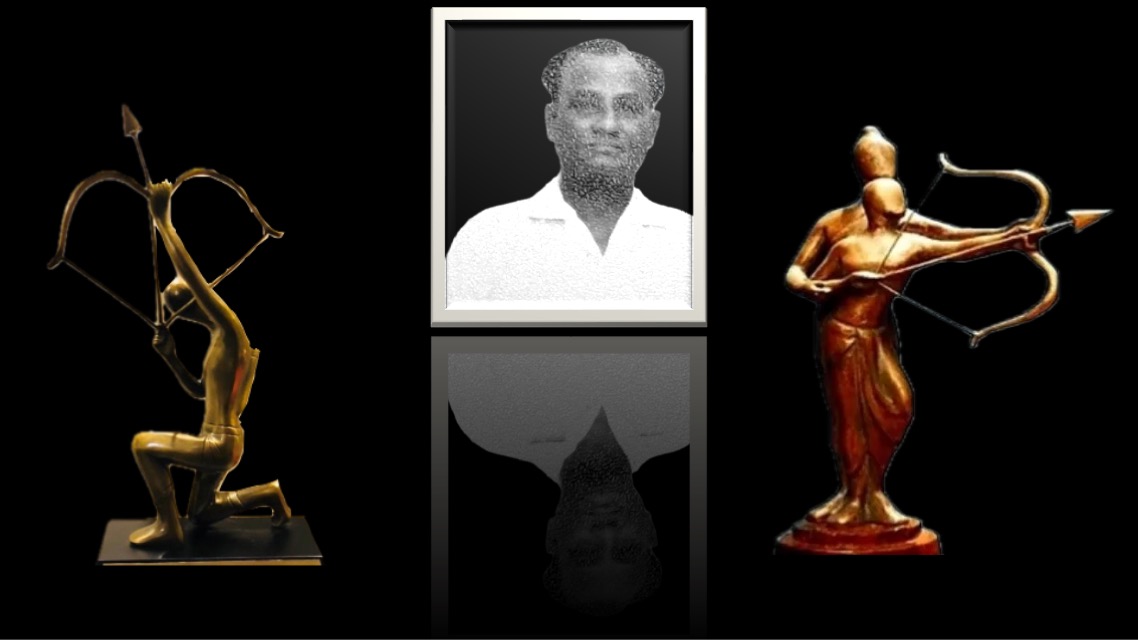
It is the day when National Sports Awards are usually conferred to the exemplary achievers by the President. Five awards, Major Dhyan Chand Khel Ratna, Arjuna Award, Dronacharya Award, Maulana Abul Kalam Azad Trophy and Rashtriya Khel Protsahan Puraskar are presented to honour excellence in sports on the National Sports Day.
The National Sports Awards establish Sport as a signpost of national identity, and timely recognition frames nationalism as belonging built on esteem and acknowledgement. Therefore, the disappointment of some over the awards not being presented on National Sports Day is only natural.
For long, athletes have flagged administrative lapses, the role of National Federations in selection and inconsistencies in the process of self-nomination necessitating a reimagination of rules and roles at the institutional level. It is time to find durable mechanisms because Sports Awards are intrinsic to National Sports Day.
In essence, the National Sports Day can be a truer representation of unity in diversity, when attempts are made to elevate the status of not just elite or popular sport at international level, but also fix the gaps to let it flourish at the grassroots and amongst all strata of people irrespective of origin and demography.
While there appears to be political will, institutional support and public engagement to establish its unique salience beyond the semiotics is much needed.
Kulveen Trehan is Associate Professor, University School of Mass Communication, GGSIP University, Delhi.

Wonderful article Dr Kulveen