

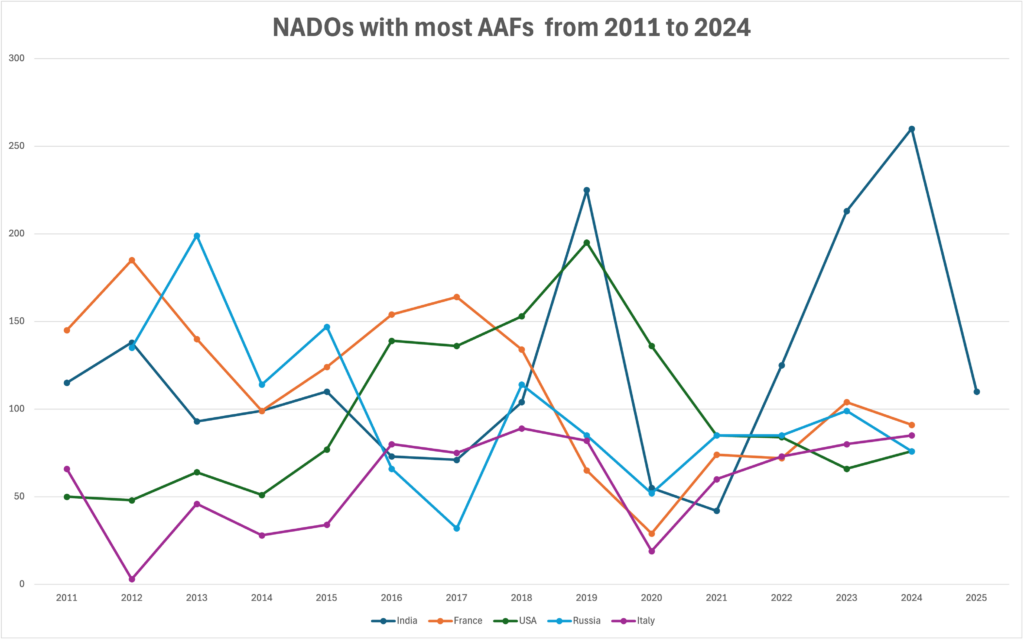
The National Anti-Doping Agency (NADA) has revealed that the number of Adverse Analytical Findings or positives for prohibited substances have dropped to 110 so far this year from a whopping 260 in 2024. If it finds World Anti-Doping Agency’s appreciation, NADA’s approach could well become a text book case for anti-doping warriors around the world.
Have Indian athletes, their coaches and everyone else in the ecosystem finally become aware of the long-term risks involved in doping? Ministry of Youth Affairs and Sports and NADA have shared some plausible reasons for this stunning development last week and in the wake of WADA’s 2024 Testing Figures Report released earlier this week.
In response to an unstarred question by Randeep Singh Surjewala in the Rajya Sabha on December 11, Minister of Youth Affairs and Sports Mansukh Mandaviya listed several measures to combat the doping menace – from increased testing by NADA to education and awareness outreach.
On Wednesday, NADA bolstered that with references to its Know Your Medicine App, testing for contaminated supplements and strategic collaboration with WADA and other stakeholders.
While it is not clear if any of these has directly led to the drastic decline in numbers, before we look at the reasons, it is important to understand why there has been a touch of surprise among the anti-doping community in the sharp reduction in number of doping instances. In the past, expanded testing by NADA has often led to a larger number of positives than earlier.
A study of nations with the most AAFs in the last 14 years (graph below) reveals that some have been able to reduce the incidence of doping by more than 50 per cent from the previous year. Russia managed that in 2016 when it reported 66 AAFs compared to the 147 in 2015 year. France emulated that in 2019, with 65 AAFs showing up as against the 134 in 2018.
The searches on NADA’s Know Your Medicine App went up from 2.40 lakh in 2024 to 4.50 lakh in 2025 and could have made a difference in creating a more vigilant athlete. As could NADA’s social media outreach (52.27 lakh, up from 8.88 lakh in 2024) and messaging outreach (5.17 lakh in 2025).
For instance, NADA pointed at statutory backing through the National Anti-Doping Act 2022 National Anti-Doping (Amendment) Act, 2025 and suggests that these have impacted the anti-doping battle. It is quite well known that these have yet come into force, awaiting a notification by the Office Gazette of India.
NADA also suggested that since clean sport has been embedded in the National Sports Policy, Khelo Bharat Niti 2025, Indian sport has become cleaner. However, it is not as if it is only now that Government has professed a desire to promote ethical competition and shown zero tolerance for doping.
Yet, while we commend NADA’s work in successfully reining in the incidence of doping, we will have to look elsewhere to see how NADA brought the numbers down. It is being surmised that it has most likely changed the testing strategy in 2025, taking care not to exclude the top athletes. A deeper study of the testing done this year will reveal if this is a good guess.

