
The good thing about the Ministry of Youth Affairs and Sports sharing selection criteria for individuals and teams a year ahead of the Asian Games in Aichi-Nagoya is that it allows the sports ecosystem in the country the time to understand and embrace the idea that India is switching from participating to being more competitive in the Asian Games.
Of course, such benchmarking should have been done as soon as the Indian team returned from Hangzhou 2022 Asian Games two year ago. It would have given the country’s sportspersons and teams more time to aim to not only make the grade but also plan improvement beyond the Asian Games.
The Ministry’s directive on March 10, 2015, appears to have served as a good reference point to return to now. It had specified sixth place for individual events and eighth place for team events. It had also indicated that no athlete, coach and support staff who had not been cleared by Government would be allowed to be part of the contingent even at no cost to Government.
If the rules were applicable to the Olympic Games as well, the size of the Indian contingent to the Paris 2024 Olympic Games would have shrunk from 110. But the Ministry has correctly observed that the qualification standards for the Olympic Games are laid down by the respective International Federations and has chosen not to make it any tougher.
Since the aspiration to get better as a sporting nation must be independent of hosting of major sporting spectacles, it may be important for the Ministry to look at some disciplines from a different lens. With India aspiring to host the 2030 Commonwealth Games and the 2036 Olympic Games primarily in Ahmedabad, the Ministry must drive growth in more sport.
Of course, that does not have to mean that India must send larger than necessary contingents to the Asian Games, but these disciplines must be identified and supported so that their athletes and teams can meet the fairly stringent selection criteria laid down by the Ministry at least in the 2030 Asian Games.
Some flexibility is called for when it concerns coaches and support staff. Had it not been for such flexibility, Jaspal Rana would not have made it to Paris to guide Manu Bhaker to twin Olympic medals. Instead of getting everyone on the same page, it seems easier to rule that coaches and support staff cleared by Government cannot be part of the contingent.
However, the Ministry’s resolve to clear only medal prospects will be tested less than a year from now. It is not as if such a framework for transparent selection has been drawn up for the first time. And nearly each edition of the Asian Games has seen some athlete or team find ways to get past such well-intentioned rules.
Of course, it is one thing to convey such strong intent with a view to lay down transparent and equitable framework for selection of athletes and teams for participation in multi-discipline competition, but altogether another to implement that in letter and spirit. More so by those in the corridors of power in the Jawaharlal Nehru Stadium and Shastri Bhavan.
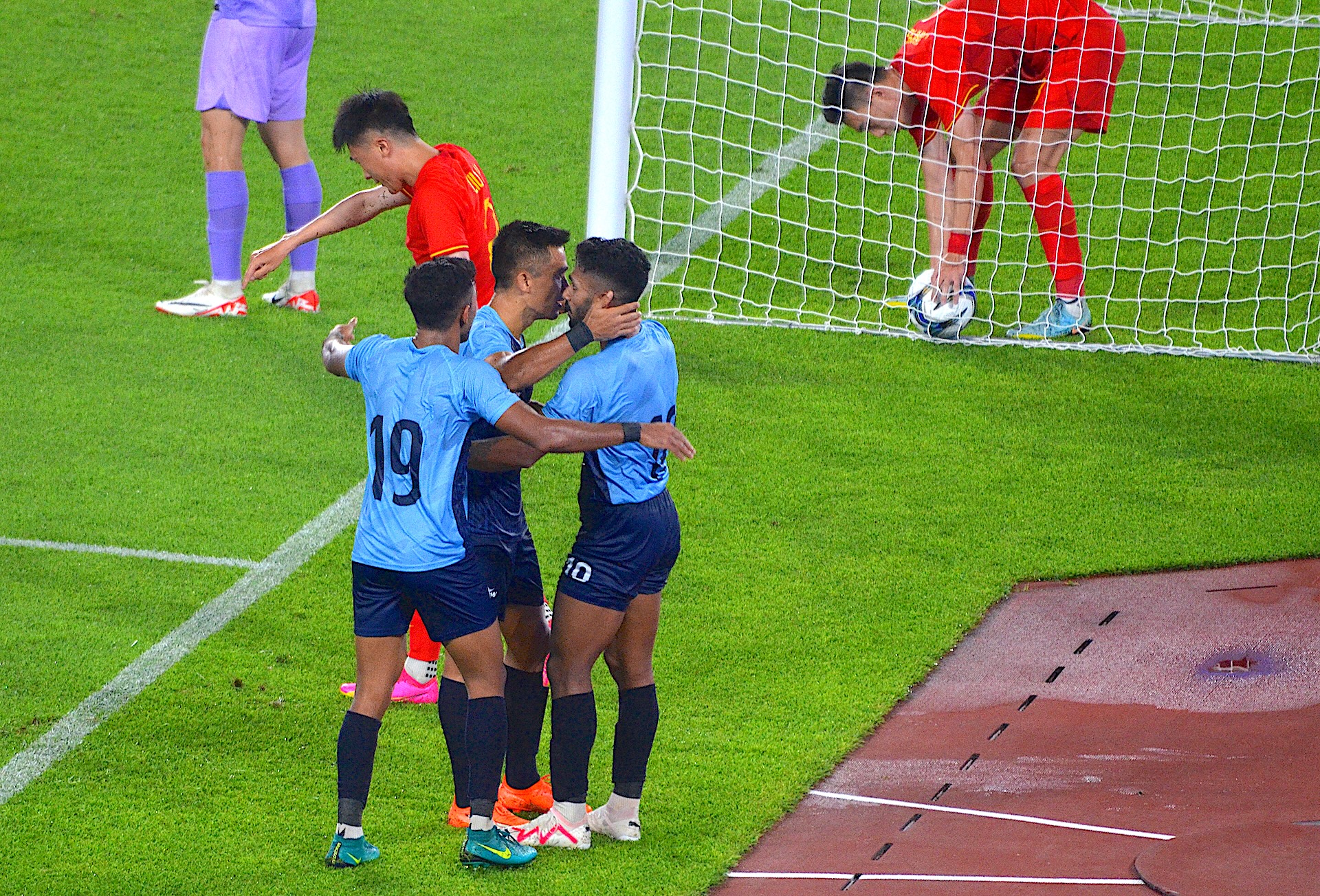
It is no secret that the men’s football team participated in the last Asian Games despite not being in the top 8 in Asia. In 2018, IOA had its way and refused to enter the football team that it did not consider a medal prospect. Even for the Hangzhou 2022 Asian Games in 2023, Government cleared the football team after a lot of dust was kicked up.
Eventually 11 of the chosen squad did not make it to China because their clubs would not release them for play for India. And, playing without a single training session together, the team lost to China 1-5, beat Bangladesh 1-0 and drew with Myanmar 1-1 in the group stage before losing 0-2 to Saudi Arabia in the pre-quarterfinals.
Then again, Indian Football has checkered history, having won the Asian Games men’s gold medal in 1962 and the silver in 1970 but not making it to the semifinal stage since. In fact, the last time the men’s team advanced to the quarterfinals was back in 1982. And India has lost 9 of the 16 matches it has played in five editions in the 21st century.
Then again, it is not just football that almost always secures exemption. It cannot also be forgotten that the men and women’s Handball teams ramped up the number of Indians in 2018 in Jakarta, thanks to an order of the Allahabad High Court. The men finished 10th among 13 teams and the women ninth among 10.
Though the Equestrian Federation of India stood the Show Jumping team down in 2023, some Government officials recommended its inclusion. There are no prizes for guessing that athletes, coaches, support staff and National Sports Federations themselves lobby hard for Government clearance when it becomes apparent that they would not make the cut as per the criteria.
The thrust on medal-winning possibilities rather than on inflating the contingent size is welcome and indication of the intent not merely to roll back to the 2015 criteria but also possibly a firm step forward in making a statement about the approach to high performance sport in the coming years.
