
A heart that beat for Shooting Sport has been stilled. A mind that was always immersed in the nuances of Shooting has been switched off. Two weeks shy of his 50th birthday, Jaspal Rana, magician and maverick, admired and misunderstood, has passed, leaving the sporting community in shock.
If a sport that was considered an elitist pursuit, changed to being a mass sport, Jaspal Rana’s rise in the 90s was a massive catalyst. For one who shot his initial competitions with a borrowed pistol, Jaspal Rana’s performances – eight Asian Games medals, including four gold and 15 Commonwealth Games medals, including nine gold, served as inspiration for many.
The pioneering Trap Shooters Dr. Karni Singh and Raja Randhir Singh were royalty, and it was not until Jaspal Rana won the 25m Standard Pistol gold in the World Junior Championships in Milan in 1994 that the middle-class and the lower middle-class thought of taking up Shooting as a competitive sport.
Nobody would have grudged him if he chose to rest on his oars. But Jaspal Rana was not made to rest. He wanted to plough his knowledge back in sport. And how well he managed that. Having headed the National Rifle Association of India’s Junior Development Programme, he helped a crop of shooters which is standing India in good stead.
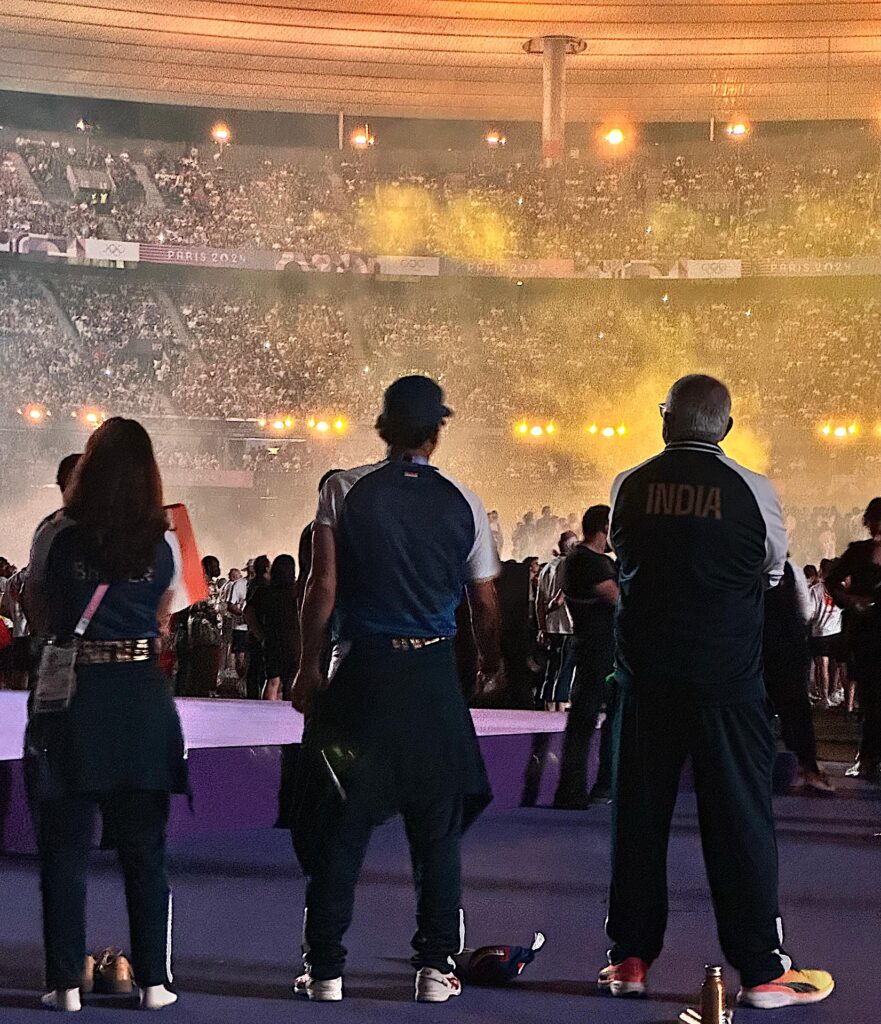
He made it to the Paris 2024 Olympic Games as Manu Bhaker’s personal coach, thanks to interventions by senior sports journalist S Kannan and Indian Olympic Association President PT Usha. And India was rewarded with two bronze medals in return, Manu Bhaker backing up her 10m Air Pistol showing by teaming up with Sarabjot Singh to climb the podium.
Once he believed in something, Jaspal Rana would remain unmoved, even to the point of being adamant. But anyone who knew him well would understand and appreciate that his firm stand always came from a pure, rather than personal, space. He had no hesitation ever in calling a spade a spade, even if he knew he would lose some friends in the bargain.
Now, please bear with me when I get personal. My first meeting with him was soon after he had won the World Junior Championships in Milan in 1994. Given the strict protocols in place in the Dr. Karni Singh Shooting Ranges, our meeting was in the Administrator Manmeet Singh Goindi’s office.
I remember how he encouraged my daughter Priya to try her hand at shooting and, from very close quarters, I witnessed how wonderful he was with newcomers to the sport as with elite shooters. Of course, he knew which triggers would work well for shooters at various levels and he pressed them admirably.
I was lucky that I could visit him in the lovely academy that he set up in sylvan settings on the outskirts of Dehradun. It is a labour of his love, crafted with care and passion that only he was capable of. It would be the greatest tribute to his memory if the academy will continue functioning effectively and efficiently – and on the ideals he had chosen to embrace.
He was my go-to person of matters related to Shooting, be it when I needed insights into the art and science of coaching elite athletes or when I had to understand the evolution of the sport and its participants in the past few decades. With his disarming honesty, he would open a treasure trove from which I could draw learnings.
There was so much to glean from him but there is one thing that stands out in memory. His gratitude for his coach Tibor Gonzcol was in evidence soon after Manu Bhaker became India’s first woman shooter to win an Olympic medal. In what could have been a moment to bask in glory, Jaspal Rana chose to remain humble and thank the source of his basic knowledge.
In March this year, the phone rang and his name illuminated the screen. He was calling to chide me for having accepted to deliver a talk pro bono. “Anna, if you do not put a price on your time and effort, people will take you for granted,” he told me. It was not his gentle rebuke that struck me but the effortless manner in which he continued to offer lessons.
The last I spoke with the champion was a few weeks ago, just before he left India for what has sadly become the final time. It would appear that his health deteriorated in Munich and while there were signs of recovery after he underwent a stenting procedure, his end came rather suddenly on Friday morning.
The stream of visitors to pay him their last respects as he lay in state in the Sainik Farms residence that he so lovingly built is testimony to the respect and love he drew from the shooting community and beyond. The scrolls for the Padma Shri and the Arjuna Award stood mute testimony to the number of mourners who made a beeline to see him one last time.
The tears won’t stop rolling, and we can only pray that his soul finds the peace that it richly deserves.

A profoundly moving tribute, Sir.
What strikes me most in Jaspal Rana’s journey is not merely the medals he won or the champions he produced, but the bridge he built between generations of Indian sport. He represented a rare breed of sporting leaders who refused to let knowledge retire with them. Instead, they chose to reinvest every lesson, every scar, and every insight back into the ecosystem.
For those of us who aspire to contribute to a stronger Indian sporting culture, personalities like Jaspal Rana are invaluable. They are not just coaches or former athletes; they are repositories of institutional memory. They carry an understanding of excellence that cannot be learned from manuals, certifications, or policy documents. Their lived experiences help younger stakeholders avoid repeating mistakes, accelerate learning, and preserve the values that underpin sustained success. Your tribute beautifully captures not just the loss of a champion, but the loss of a mentor, teacher, and institution-builder. The greatest homage we can pay to pioneers like him is to ensure that their ideas, values, and commitment to excellence continue to influence the generations that follow.