
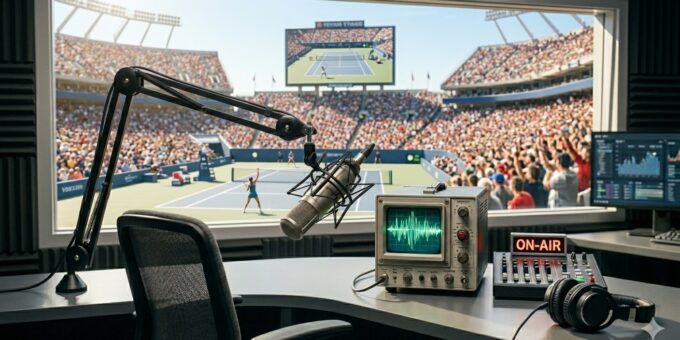

World sport is moving rapidly ahead, embracing and making the best use of technology at all levels, not just elite. At the heart of such developments are the fan (and the Dollar, Pound, Euro and Rupee that comes along) and the athlete, both are significant and sizable populations that guarantee the smart innovators considerable business and satisfaction.
And while this is happening elsewhere, India seems to be stuck not just in the past but also in a quagmire of our own making. We cannot break free from issues of elections and selections as well as from selective enforcement of laid down rules. We are lost in exchanging emails, show cause notices and replies, court battles and reflection summits.
There were the thoughts uppermost in the mind when I attended the Smarter Sports Awards online on Wednesday evening. Hosted by London-based The STA Group, the ceremony and the conversations offered a deep insight into how modern sport is being shaped. While 17 Awards were given away, here is a look at some.
From an athlete perspective, World Rugby and Prevent Biometrics’ Smarter Innovation of the Year Award is a revelation. They won for instrumented smart mouthguards that deliver alerts to coaches and medical practitioners when a player has a head impact acceleration of significant magnitude. It enables the team personnel to identify players needing sideline evaluation.
GSI Performance picked up the Smarter Coaching Systems Award for reshaping the way contact sport is coached and raising the bar for collision sports coaching with smarter, safer and more sustainable training aids that reduce physical contact in training. Its work in the area of coaching is an eye-opener indeed.
Interestingly, GSI Performance Founder Richie Gray developed the Five Fights framework, encompassing Track, Prepare, Connect, Accelerate and Finish, to focus on improving performance by training the contact and collision range with safer, more efficient techniques.
From a teams’ perspective, the Smarter AI in Sport Award for Brighton & Hove Albion Football Club is revealing. It has used data analytics and intelligent decision making rather than making huge financial investments or star signings to rise from the third rung of England’s football to Premier League as one of the world’s richest football clubs in the span of a decade and a half.
Let us examine a couple of fan-specific innovation.
The German Football League, Bundesliga, and Amazon Web Services (AWS) teamed up for not just optics but also measurable commercial and operational impact. It can make Bundesliga the world’s most innovative league. They identify game-changing solutions, helping cut costs, gain greater insight, and enhance fan experiences.
Piing has ushered in a revolution in fan engagement during breaks in play with games for the crowd as it saw an opportunity in how T-shirt canons and FanCams reach only a few people in a large crowd. With innovative games on the big screens in stadia, Piing engages a lot more by creating an atmosphere and, as is the norm now, collects data at the same time.
HOK won the Smarter Venue and Infrastructure Innovation Award for taking up renovation of Avicii Arena in Stockholm. It was a ‘underperforming’ venue and HOK revolutionised it by – as the judges said – improving fan experience, increasing flexibility, preserving heritage, avoiding rebuild emissions, and returning it to relevance in sport and entertainment.
To be fair, there was a fairly strong Indian component in the Awards, with Infosys’ AI Commentary (Australian Open tennis and Formula E racing) picking up the Smarter Performance Intelligence Award and Jio Star bagging the Smarter Sports Broadcast and Production Award.
The judges said that by translating complex live performance data into instantly usable insight, Infosys has reimagined the way sport could understand and communicate action in real time. For Jio Star, they said the brilliantly executed piece of broadcast innovation is standout example for the scale, reliability and audience-centric design of the production technology.
Yet, while celebrating the rapid pace with which World Sport is advancing, it was hard to not think of Indian sport and the ecosystem. It keeps waiting for a slingshot that that deliver it to the next generation of sports training, coaching, immersive fan experience that can make it rub shoulders with the best in the world. More often. More consistently.
Image: Generated by Google Gemini for illustration purposes only
