
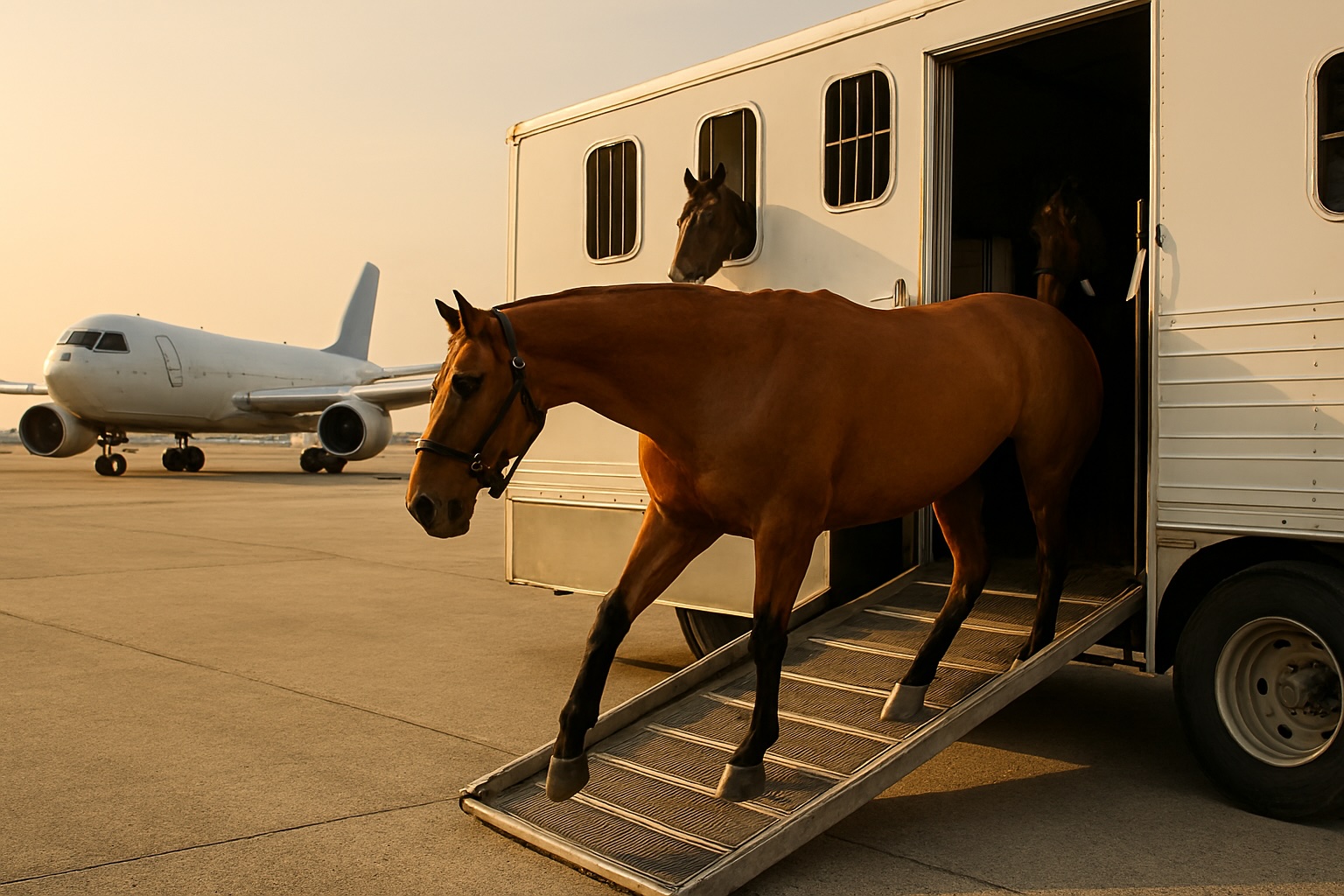
The Ministry of Youth Affairs and Sports has initiated steps to facilitate Equestrian riders transport their horses based in India to Japan for the Asian Games later this year. It has written to the Department of Animal Husbandry and Dairying (DAHD) to try to negotiate a temporary arrangement with Japanese Ministry of Agriculture, Forestry and Fisheries.
Earlier this week, Secretary (Sports) Hari Ranjan Rao wrote to his counterpart in the DADH, Naresh Pal Gangwar, with copies to the Ministry of External Affairs Joint Secretary (East Asia division) Sujit Ghosh, the Ambassador of India in Japan Nagma Mohammed Mallick and the Indian Olympic Association President PT Usha, seeking DAHD guidance and intervention.
“Indian riders who wish to compete at international events are often required to import stable horses through Europe or other third countries in order to meet entry and quarantine requirements. This process involves significant additional travel, prolonged stabling, higher costs and increased stress on both horses and riders,” he wrote.
“As a result, several capable Indian riders and well trained Indian horses are unable to participate, not due to lack of sporting merit, but because of the logistical and financial constraints,” the Secretary (Sports) wrote, explaining the urgent need for India to engage with Japan to try and secure temporary import of horses for the Asian Games.
It may be a bit late in the day, but the Ministry has shown that it has taken into account feedback from riders after the Asian Equestrian Championships in Pattaya last year and is seeking solutions for a problem that has existed for more than a decade now. While India can import horses, it cannot directly export them to competition venues.
As things stand, riders based in India are disadvantaged and have to spend a small fortune in leasing, if not owning, horses in Europe to be able to compete in other nations. It is a vexatious issue plaguing the sport in the country, preventing its evolution at home and favouring those who can base themselves overseas.
India was unable to field any Equestrian entries in the Guangzhou 2010 Asian Games since China had doubts about the quarantine procedures followed in Bangalore. It did not permit the eight horses to travel to the competition. EFI blamed the ‘deliberate misinterpretation of lab reports by biased and malicious approach of the Chinese’.
Back in June 2014, the European Commission recommended to the European Union that it allow a temporary recognition to the Meerut facility as an approved Equine Disease Free Zone. It recommended that the recognition be approved till October 2014 to facilitate Indian entries for the World Equestrian Games in Normandy, France, in August that year.
As things panned out, the only one who competed for India, Sanjay Bagai, was based in the United States of America. The Meerut facility did not make attempts to secure a permanent recognition from the European Union that would allow horses based in India to travel to competition even in Asia.
While horses based in India competed in the Incheon 2014 Asian Games – and the team returned without a podium finish – and three Show Jumping horses were flown from Chennai for the 2018 edition in Jakarta-Palembang, no horse travelled from India to Hangzhou 2022 Asian Games, India’s riders picked up two medals each in the last two editions of Asian Games, including a Team Dressage gold in China.
Combined with a change in selection criteria caused by the year-long delay due to Covid-19 pandemic, confusion reigned in the Equestrian community ahead of the last Asian Games, many riders moving the High Court of Delhi. EFI sought Government funding to lease four horses only for the Eventing discipline, but the Europe-based Dressage riders delivered medals.
It was in January 2022 that the Department of Animal Husbandry and Dairying initiated action to activate and operate the Equine Disease Free Zone (EDFZ) at the Remount and Veterinary Corps in Meerut to facilitate the participation of the Indian team in Equestrian events in the Asian Games due in September 2022.
In July 2025, the Meerut EDFZ got World Organisation for Animal Health certification, but it would appear that this alone is not going to be enough to let horses from India travel to overseas competition. By all accounts, a European Union certification is the gold standard across the world – and that is not easily secured and may have links to diplomacy and import restrictions.
It must be hoped that those manning the EDFZ will take the steps needed to get the European Union recognition. It must be as fervently hoped that many other catalysts will also contribute toward actualising this. This would be a necessary step to foster the faster development of the sport in India.
Image created with AI
Note: The piece has been updated with the fact that three horses were flown from Chennai.
