
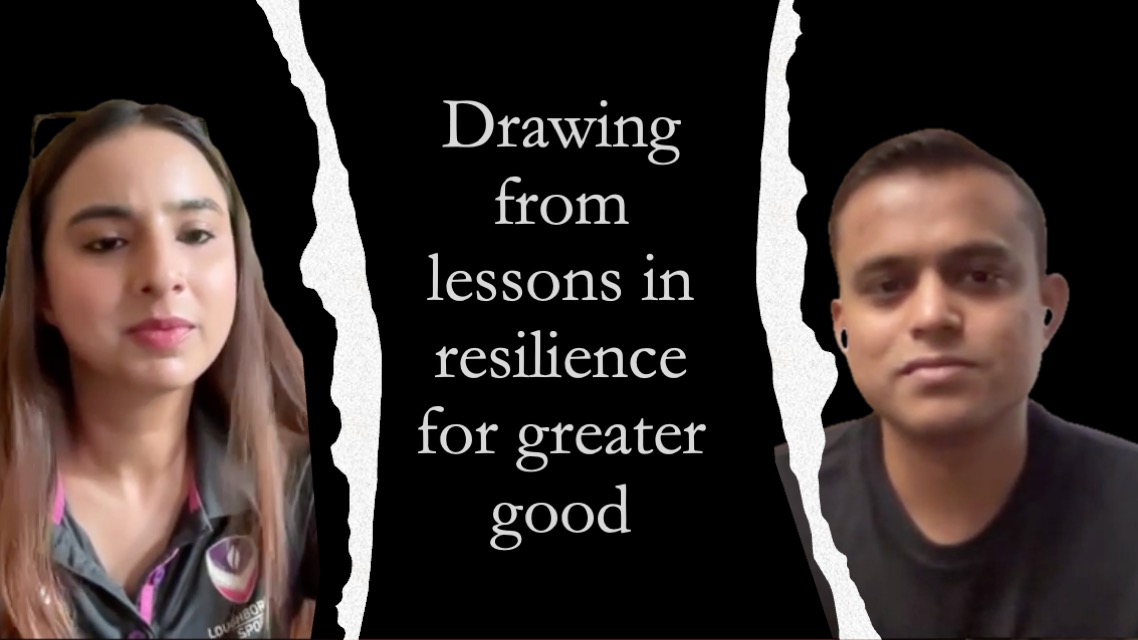
Some years ago, 400m sprinter Gayatri Bhushan learnt that purposeful curiosity could overcome fear and doubt. And, around the same time, young footballer Akash Prasad uncovered his itch to know more when he realised his playing career was not destined to be long. Unknown to one another, they headed to Loughborough University.
Last year, Sport and Exercise Psychologist Gayatri Bhushan and Sports Business and Management professional Akash Prasad returned from Britain to establish Mind Matter Performance with the idea of helping Indian athletes and teams stay motivated and deliver peak performances.
As Akash Prasad puts it, there are new learnings for the duo each month. “It started with understanding the Indian sports ecosystem from a closer range than before. We discovered that the rigidity among athletes, coaches and team managements would be a top challenge alongside the absence of support by licenced Sport Psychologists,” he says.
Gayatri Bhushan takes that up with more intensity. “At first, I thought my fight would be with others who call themselves sports psychologists without the right licences and without the right educational path. But I have realised it is the system that we have to contend with and change. There is no framework to protect the title of sport psychologist in our country,” she says.
“A six-week certificate course or a six-month diploma or even a Master’s degree in Psychology is never going to be enough for one to assist athletes deliver peak performance. We have had many athletes and organisations tell us that they have had unhappy experiences with their attempt to include sport psychology as part of their training,” Gayatri Bhushan says.
“We have started to have conversations with Government officials about introducing a licencing system for sport and exercise psychologists,” she says. “It will enhance the credibility of the practitioners and make the athletes less wary of sport psychology. More importantly, we will be preventing some harm to the athletes themselves.”
“If change has to happen, it must be at the structural and systemic level than pointing fingers at individuals,” she says. “I learnt that I need my learnings from overseas education to be culturally adapted to resonate with our athletes. Bringing in best practices won’t matter if they are not culturally adapted.”
Akash Prasad says they understand that an athlete could be more comfortable and share a great bond with someone who does not have a licence. “However, it is purely about the output that licenced sport psychologists can get for the athletes,” he says, pointing out that guided training is essential for someone to contribute more meaningfully to an athlete’s evolution.
His colleague points out that while India has added some world class infrastructure, it has not evolved from a sport psychology perspective as much as she expected, candidly admitting that she had believed the environment in India would be vastly better now than when she was a competitive athlete a decade and a half ago.
“I had the talent to do well on track, but I did not handle the pressure of expectations that came along with success. I had to give up something that I loved very much because I did not get the help I needed, though my parents put me in touch with a few psychologists,” she says, believing these were strong reasons for her to pursue sport and exercise psychology.
The Delhi-based sport psychologist points out that psychology should not be related only with mental health issues, anxiety, stress and competition pressure. “The bigger component of the science is building athletes’ skill. A sport psychologist can help the athlete to manage emotions, bring their best skills under pressure and perform at their peak when it counts,” she says.
Gayatri Bhushan paints a grim picture of the athletes’ understanding of sport psychology. “Most Indian athletes do not know what it is or even the mental aspect of their sport. They know they have issues; they know they have problems; and they know that they can develop certain skills to perform at their peak. But they do not know who to consult to resolve these issues,” she says.
“A lot of such issues are dealt with by their coaches themselves. The athletes do not explore the option of going to a sport psychologist. They seek to hone mental skills only when they reach a certain level. We must encourage athletes to start early,” Gayatri Bhushan says. “If they start at a later stage, they do not have the space to connect with development of mental skills.”
She explains why many athletes are very wary of sport psychologists. “They are very wary of the confidentiality being breached. For instance, there was some self-harm involved for an athlete with mental health issues. But the team’s counsellor shared that information with everyone in the team and there was only embarrassment for the player and little support,” she says.
The duo has discovered that being Founders and starting something on their own in the world of sports is not easy. “Every day is different. We have needed patience and courage to ignore the politics in the Indian sports industry,” Gayatri Bhushan says, in a matter-of-fact manner without a trace of bitterness or even a hint of being disheartened.
